Einschreibeoptionen
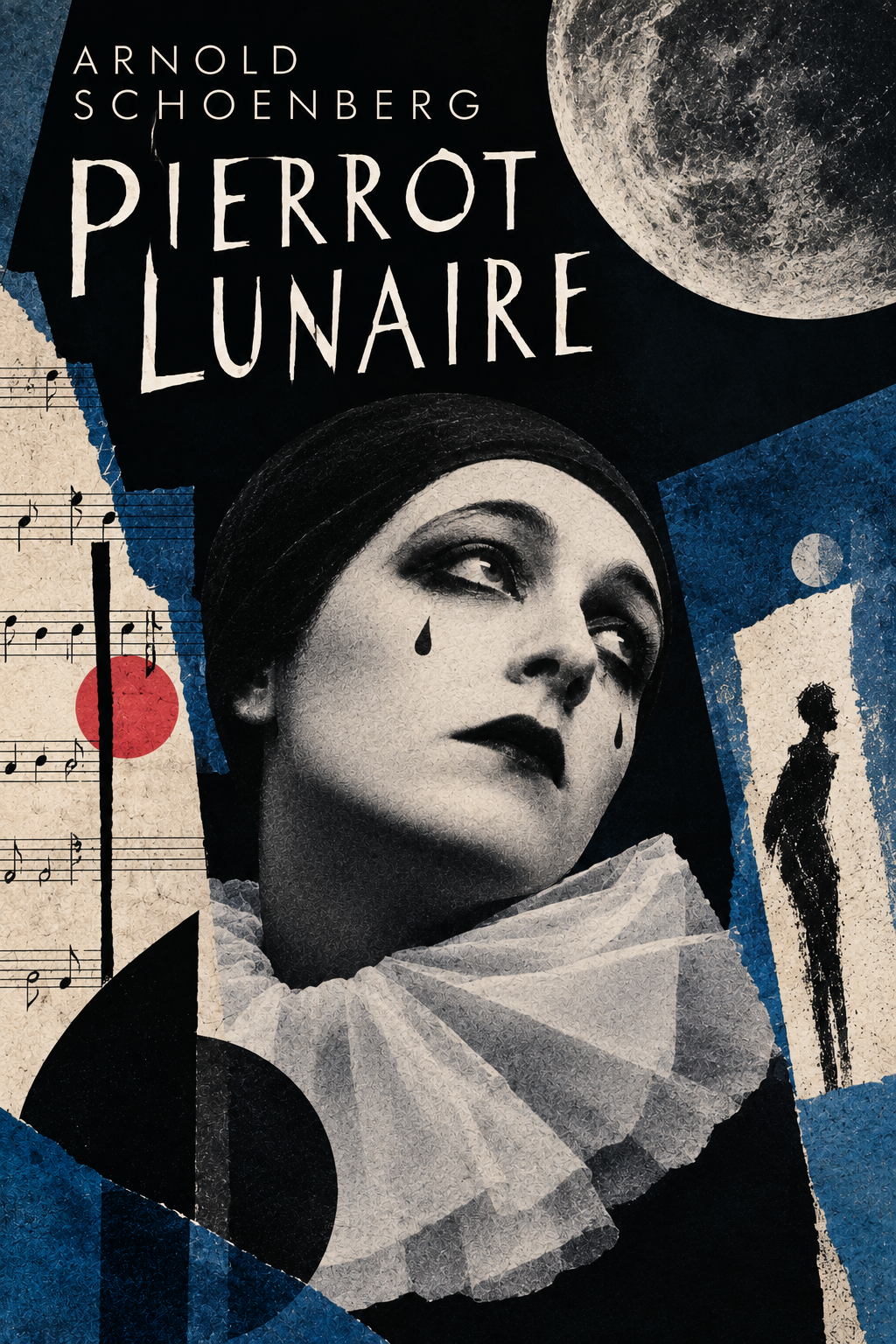
Few twentieth-century works have inspired as many creative, critical, and scholarly responses as Arnold Schoenberg’s groundbreaking melodrama cycle Pierrot Lunaire, op. 21, for voice and chamber ensemble (1912). In his genre-bending settings of Albert Giraud’s poetry, Schoenberg reimagined the eccentric commedia dell’arte character of Pierrot and built on its multifaceted reception in literature, the visual arts, theatre, silent film, and dance. Blending old and new compositional techniques, he famously cast the vocal part in a special form of Sprechstimme, half-spoken, half-sung, and devised a timbrally rich instrumental accompaniment executed by what is now commonly known as the Pierrot Ensemble.
In this seminar, we will, on the one hand, explore Pierrot’s score and its manifold interpretations by an international array of modernist, avantgarde, jazz and pop musicians as well as staged and multimedia adaptations for theatre, dance, film, and VR from across the globe. On the other hand, we will look at the compositional reception of Pierrot, specifically how Schoenberg’s use of Sprechstimme inspired the development of extended vocal techniques, how composers around the world adapted Schoenberg’s malleable instrumentation in the form of the Pierrot Quintet and Pierrot Plus Percussion, and how Pierrot instigated new theatrical chamber works. The chosen materials reflect inclusive excellence as they feature the voices of BIPOC artists, women, as well as artists from the LGBTQIA+ and the disabled/differently abled communities from five continents. Last, but not least, the international critical and scholarly reception of Pierrot, its performances, and its companion pieces is considered too – through such lenses as performance, cultural, feminist, and disability, and global music history studies.
- Trainer/in: Sabine Feisst